

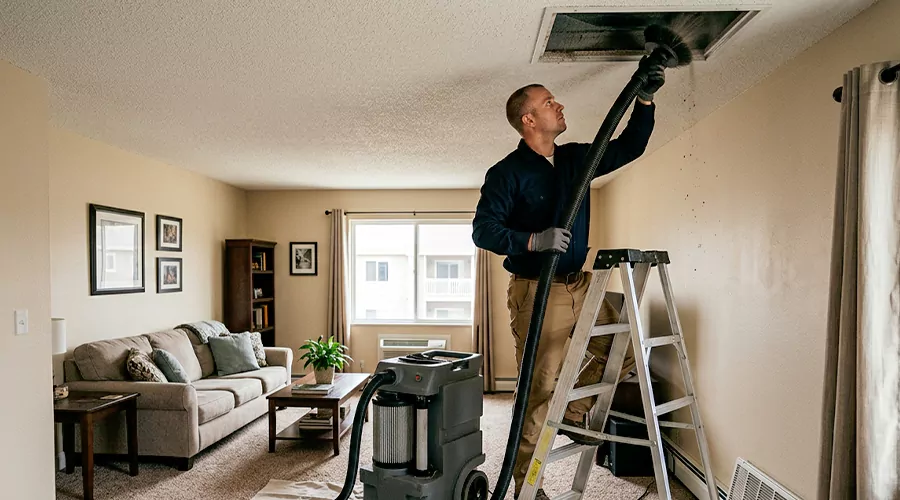
Dirty air vents in an apartment are usually caused by household dust collecting on grille openings as air circulates through the heating and cooling system. Pet hair and cooking particles can increase the buildup, while neglected filters may contribute to equipment contamination. Some apartments also experience dust from renovation work or poorly maintained ventilation components.
Apartment ventilation systems differ from those in single-family homes because equipment may be located inside the unit or maintained elsewhere in the building. Some apartments have individual HVAC systems, while others use central building equipment. The source of dust and the responsibility for maintenance depend partly on which arrangement the property uses.
A dusty vent cover is not automatically a sign of contaminated ductwork. However, thick deposits that return quickly or appear alongside unusual odors can indicate a problem that deserves investigation. Understanding the possible causes helps renters identify what they can safely clean and when building maintenance needs to become involved.
Why Do Apartment Air Vents Get Dirty?
Apartment vents become dirty when indoor particles collect on the surfaces where air enters or leaves the ventilation system. Normal household activity is often the main source, but building maintenance and airflow conditions can also contribute. The amount of dust depends on the apartment's layout and ventilation equipment.
Dust From Everyday Living
Normal indoor activity releases particles that circulate through the apartment before settling on nearby surfaces. Walking across carpets can disturb trapped dirt, while clothing and upholstered furniture shed fibers into the air. These particles eventually collect on floors or become trapped along vent openings where airflow changes direction.
Apartments with carpeting may experience more visible dust accumulation around low-mounted return grilles. Frequent foot traffic can also increase the amount of material entering the air. Regular household cleaning reduces these particles but cannot eliminate every trace of dust.
Dirty or Neglected HVAC Filters
An HVAC filter captures some airborne particles before they travel through downstream equipment. When a disposable filter becomes heavily loaded, it can restrict airflow and reduce system performance. An incorrectly fitted filter may also allow particles to bypass its edges and collect on internal surfaces.
In rental properties, filter replacement responsibilities depend on the lease and the equipment arrangement. Some residents change accessible filters themselves, while others rely on building maintenance. If the filter location is unknown, checking the rental instructions is safer than opening unfamiliar HVAC equipment.
Previous Occupants and Move-In Conditions
An apartment may contain accumulated dust from previous occupancy or maintenance activity. Vent covers can retain deposits when they are not cleaned thoroughly between tenants. Material may also collect in accessible openings during repairs or remodeling before the new resident moves in.
This type of buildup is particularly noticeable when the surrounding walls have recently been painted but the grilles were not removed for cleaning. A clean room with heavily dusty vents can suggest that the covers received less attention than other surfaces. However, visible dust alone cannot establish how long the deposits have been present.
Renovations in the Building
Construction activity inside an apartment building can create airborne dust that moves through corridors or enters individual units through openings. Drywall sanding and floor replacement are common examples of activities that release fine particles. Some dust may settle on vents even when work is taking place outside the apartment.
The effect depends on the building's ventilation design and how construction areas are separated. Not every apartment shares its heating and cooling ducts with neighboring units. However, dust can still migrate through gaps or ordinary building air movement.
Cooking Smoke and Indoor Activities
Cooking releases airborne particles that can settle on vent covers and surrounding walls. Oil residue can make the deposits sticky and more difficult to remove with ordinary dry dusting. Apartments with limited kitchen exhaust may experience more noticeable buildup near cooking areas.
Candles can also release fine soot particles when combustion is incomplete. The resulting deposits sometimes appear darker than ordinary dust. Identifying these sources is useful because repeatedly cleaning the grille will not prevent staining if the same particles continue circulating.
Moisture and Condensation
Cold supply vents sometimes collect condensation when humid room air contacts their surfaces. Moisture makes dust adhere more firmly and can create dark stains around the grille. Persistent dampness may also damage ceiling paint or surrounding drywall.
In apartments, moisture problems may involve building insulation or ventilation conditions that residents cannot inspect directly. A stain that repeatedly returns after cleaning should therefore be documented. Correcting the moisture source matters more than removing the visible residue alone.
Do Apartment Buildings Share Air Ducts?
Some apartment buildings use central heating or cooling equipment, while others have separate HVAC systems for individual units. The design determines which components are shared and which belong to a specific apartment. A central building system does not automatically mean that neighboring apartments exchange air through the same supply ducts.
Many apartments have dedicated equipment that circulates air within one unit. Other buildings use systems that provide conditioned water or air from central mechanical equipment. Bathroom exhaust and hallway ventilation may operate separately from the apartment's main heating and cooling system.
| Apartment System | How It Generally Works | Possible Maintenance Concern |
|---|---|---|
| Individual central HVAC | Conditions air for one apartment | Filter condition and unit ductwork |
| Packaged terminal AC unit | Conditions the room near the equipment | Dirty intake grille or washable filter |
| Central building ventilation | Moves air through designated building systems | Shared equipment maintenance |
| Bathroom exhaust | Removes air from the bathroom | Dust collecting on exhaust grille |
| Kitchen exhaust | Removes or filters cooking air | Grease and particle buildup |
| Corridor ventilation | Supplies or controls airflow in common areas | Building-level filtration and maintenance |
Air movement between apartments can also occur through openings unrelated to the HVAC supply ducts. Gaps around plumbing penetrations or poorly sealed building components may allow odors or particles to travel between spaces. Determining the source requires understanding the building's actual ventilation arrangement.
For renters, the most useful starting point is identifying whether the dirty opening belongs to the main HVAC system or an exhaust fan. These systems serve different purposes and may follow different maintenance procedures.
Why Are Apartment Return Vents Often Dirtier Than Supply Vents?
Return air vents frequently look dirtier because they collect room air before it passes through the HVAC filter. Dust can settle directly on the grille as air moves inward. Supply vents deliver conditioned air into the room and may instead develop staining around the edges where airflow passes across nearby surfaces.
A large return grille in a small apartment may handle air from several rooms. Particles produced in the kitchen or living area can eventually travel toward the same opening. This concentration of airflow can make the grille appear heavily coated even when the system is functioning normally.
The filter location also matters. If the filter sits inside the air handler, dust may collect on the return grille before the air reaches the filtration material. The presence of surface dust therefore does not automatically mean that the filter has failed.
However, thick lint covering a substantial part of the grille can restrict the return path. Keeping the openings clear supports normal air movement and makes it easier to notice unusual deposits.
What Are the Warning Signs of a Dirty Apartment Vent Problem?
Light dust around apartment vents is common, but unusual buildup should be evaluated alongside other symptoms. Repeated material discharge and persistent moisture are more concerning than a thin surface coating. Recording the location and timing of the problem helps distinguish normal housekeeping needs from building maintenance issues.
Look for these warning signs:
- Thick dust accumulates across a large portion of the vent grille.
- Loose particles visibly blow into the apartment when cooling starts.
- Dust returns unusually quickly after the cover has been cleaned.
- One room receives noticeably less conditioned air than similar rooms.
- Dark stains repeatedly develop around a ceiling vent.
- A persistent musty odor appears during HVAC operation.
- Condensation or water marks form around the opening.
- Visible debris extends beyond the accessible part of the grille.
- The filter is damaged or does not fit its housing correctly.
- Unusual airflow noises occur when the system operates.
A single symptom does not necessarily identify the cause. For example, reduced airflow can result from a blocked grille or a dirty filter rather than heavy deposits inside the duct. A musty odor may also originate from a separate moisture source within the apartment.
Photographs and a written record of recurring symptoms are useful when the problem requires building maintenance. Documentation allows the same area to be compared before and after cleaning or inspection.
How Can You Check Dirty Apartment Vents Yourself?
Renters can usually perform a basic visual inspection without opening concealed ductwork. The safest approach is to examine accessible grilles and confirm whether any visible filters require attention. Avoid dismantling shared mechanical equipment or modifying building components without permission.
Follow these steps:
- Turn off the HVAC system. Wait until the blower stops before inspecting an accessible grille.
- Photograph the deposits. Record the vent location and any unusual staining before cleaning.
- Check the cover. Look for loose dust or thick material blocking the openings.
- Vacuum the surface. Use a soft brush attachment to remove ordinary household dust.
- Inspect the accessible filter. Follow the apartment's maintenance instructions before removing or replacing it.
- Compare other rooms. Check whether the buildup affects one opening or several.
- Monitor the results. Record whether the same deposits return over the following week.
This inspection helps identify simple problems such as a dusty return grille or an obstructed supply opening. However, it does not reveal the condition of concealed ducts or central building equipment. If the problem appears to involve shared components, further investigation should follow the property's maintenance procedure.
Avoid spraying disinfectants into apartment vents because the chemicals may travel into the airflow path. Household vacuum attachments should also remain near the accessible opening rather than being forced deep into the ducts.
What Can Renters Clean and What Should Building Maintenance Handle?
Renters can generally handle ordinary surface cleaning, but responsibility for filters and mechanical equipment depends on the lease and local requirements. A removable grille is different from a concealed duct section or shared ventilation component. Identifying the boundary helps prevent accidental damage and disagreements over maintenance work.
| Condition | Suitable First Action | Important Consideration |
|---|---|---|
| Light dust on vent cover | Gently vacuum accessible surface | Routine household cleaning |
| Dust on nearby wall | Wipe suitable painted surface | Avoid damaging the finish |
| Dirty accessible filter | Check lease and filter instructions | Replacement responsibility differs |
| Persistent weak airflow | Document the symptoms | Internal system may need inspection |
| Water staining | Report the condition promptly | Source may involve building components |
| Suspected pest activity | Document without disturbing debris | Requires investigation |
| Significant material inside ducts | Request an assessment | Concealed components may be building-maintained |
A renter should not automatically assume that the property owner must pay for every cleaning task. Routine housekeeping obligations differ from repairs involving permanently installed HVAC equipment. Lease terms and local housing rules determine the responsibilities in a particular rental situation.
If an unusual condition appears immediately after moving in, photograph it before cleaning. This creates a record of the initial condition and helps establish whether the problem was already present.
How Should You Report Dirty Vents to Apartment Maintenance?
A useful maintenance request explains what is happening rather than simply stating that the apartment has dirty ducts. Describing visible symptoms helps the maintenance staff determine whether the issue involves housekeeping or HVAC operation. Include the affected room and explain when the problem occurs.
For example, a clear report might explain that dust visibly enters the bedroom whenever the air conditioner starts, even after the grille has been cleaned. Another report might describe repeated condensation around a ceiling vent accompanied by damaged paint. Both descriptions provide more useful information than a general request for duct cleaning.
Include photographs showing the problem and note whether airflow has changed. If a filter was replaced recently, mention that information as well. Keep copies of the maintenance request and any response so recurring problems can be tracked.
If the issue involves water intrusion or another condition that could worsen quickly, use the property's urgent maintenance procedure. Waiting for a routine cleaning appointment may allow moisture-related damage to continue.
Can Dirty Apartment Vents Affect Airflow?
A heavily obstructed vent can reduce airflow through the affected opening. However, a light layer of dust usually has little effect on HVAC performance. The amount of restriction depends on how much of the grille is covered and whether there are additional problems elsewhere in the system.
Return grilles can become obstructed by thick lint or furniture placed directly in front of them. Supply openings can also be blocked by curtains or storage items. Removing these restrictions may restore normal airflow without requiring duct cleaning.
Weak airflow can also result from dirty filters or mechanical problems inside the HVAC equipment. If an opening remains weak after visible obstructions are removed, the cause may be hidden. Comparing several rooms helps determine whether the problem affects one branch or the apartment's entire system.
Dust and airflow problems should not automatically be treated as the same issue. A vent can look dirty while delivering normal airflow, and a clean vent can still receive very little conditioned air.
When Should You Call a Professional or Apartment Maintenance?
Building maintenance or qualified HVAC personnel should evaluate recurring dust discharge and problems involving concealed ventilation components. Persistent moisture and suspected significant biological contamination also require assessment. These conditions go beyond routine surface cleaning and may involve equipment that residents are not authorized to modify.
An HVAC technician can inspect filter placement and measure airflow to determine whether a restriction is present. Depending on the building's design, the assessment may also include accessible duct connections or central mechanical equipment. The actual source should be identified before cleaning or repair work is approved.
In 2026, reported U.S. whole-system duct cleaning projects commonly cost approximately $271 to $509, although the scope and final price differ by property. This is not a standard price for an individual apartment, and renters should not assume responsibility for the charge without reviewing their lease. The building's maintenance arrangement determines how the work is handled.
The presence of ordinary dust on a grille does not automatically justify a complete duct cleaning project. Significant internal debris or another documented contamination problem provides a stronger reason for further action.
How Can You Prevent Apartment Air Vents From Getting Dirty?
Reducing apartment vent dust requires regular household cleaning and suitable HVAC maintenance. Renters can control many indoor particle sources even when they cannot access the building's mechanical equipment. Keeping grilles unobstructed and reporting unusual conditions early can also prevent small problems from becoming harder to manage.
Reduce Indoor Dust Sources
Vacuum carpets regularly and wipe furniture with a damp microfiber cloth to collect settled particles. Pay particular attention to areas around return grilles because these openings draw air from surrounding rooms. Using suitable kitchen ventilation can also help reduce airborne cooking residue that contributes to sticky deposits.
Follow the Filter Maintenance Schedule
Check the lease or building instructions to identify the correct filter location and replacement responsibility. When residents are expected to maintain an accessible filter, inspect it according to the equipment recommendations. Avoid installing an additional filter over a supply vent because it can increase airflow resistance and interfere with normal operation.
Keep Vent Openings Clear
Do not place furniture directly against return grilles or cover supply openings with rugs. These obstructions can interfere with the movement of conditioned air through the apartment. Cleaning visible lint before it covers the grille helps maintain an unobstructed opening without altering the HVAC system.
Address Moisture and Unusual Deposits
Report recurring condensation or water stains before they spread to surrounding surfaces. Keep indoor relative humidity near 30% to 50% when practical, and use the apartment's ventilation features as intended. If black deposits or unusual odors repeatedly return after cleaning, document the symptoms so the underlying source can be investigated.
Conclusion
Dirty apartment air vents usually result from normal household dust, although building maintenance and ventilation conditions can contribute. Surface deposits are generally manageable through routine cleaning. Persistent moisture or recurring particle discharge requires further investigation. Renters should document unusual problems and follow their property's maintenance procedures. This week, inspect your apartment vents and record any buildup that returns after cleaning.